Home › Blog › How Stress Affects Memory and Focus
Symptoms & CausesHow Stress Affects Memory and Focus (and How to Manage It)
| The problem | Stress makes you feel forgetful, scattered and unable to concentrate on ordinary tasks. |
| Why it happens | The fight-or-flight response floods you with stress hormones that narrow attention and crowd out working memory. |
| What helps | Slow breathing, movement, sleep, sensible boundaries, hydration and a steady daily routine. |
| The mindset | Treat stress management as a daily habit, not a one-off fix — small, repeatable actions add up. |
Almost everyone has had the experience: a stressful week arrives, and suddenly you are walking into rooms and forgetting why, re-reading the same email three times, or blanking on a name you have known for years. It is not your imagination. Understanding how stress affects memory and focus is one of the most useful things you can do for your everyday mental clarity — because once you see the mechanism, the habits that help make a lot more sense.
This is a plain-English guide to what stress does inside your body and brain, why it leaves you feeling forgetful and unfocused, and the practical, everyday steps that help you think more clearly. None of this is medical advice, and persistent or severe stress deserves a conversation with a healthcare professional — but for the ordinary pressure of modern life, small changes go a long way.
What stress actually does in the body
Stress is not really a feeling — it is a full-body response. When your brain decides something is a threat (a looming deadline, a difficult conversation, a packed inbox), it triggers the ancient “fight-or-flight” system. Your body releases hormones such as adrenaline and cortisol, your heart rate climbs, your muscles tense, and your senses sharpen. In a genuine emergency this is brilliant: it primes you to act fast. Work on stress mediators describes the same hormones as protective in short bursts and costly when the response stays switched on for months McEwen BS (Eur J Pharmacol, 2008).
The catch is that your body cannot tell the difference between a charging animal and a Monday morning. The same response fires whether you are in real danger or simply overwhelmed. And because modern stress rarely switches off cleanly, many people spend long stretches of the day with that system quietly running in the background — which is where the trouble for memory and focus begins.
How stress affects your memory
Memory is not a single thing. There is the short-term working memory that holds a phone number while you dial it, and the longer-term memory that stores the facts and experiences of your life. Stress can interfere with both, but in different ways. A review of stress across the lifespan sets out how stress hormones act on the hippocampus and prefrontal cortex, the two regions most involved in forming and holding memories Lupien SJ et al. (Nat Rev Neurosci, 2009).
Working memory gets crowded
Working memory has a very limited capacity — think of it as a small desk. When you are stressed, that desk fills up with worry: the deadline, the argument, the what-ifs. There is simply less room left for the task in front of you, which is why stressed people so often forget instructions they were given moments ago or lose their train of thought mid-sentence. That crowding is also why stressed people so often find themselves forgetting words mid-sentence.
Encoding and recall get harder
To remember something later, your brain first has to encode it — and encoding requires attention. If stress has your attention pulled elsewhere, new information never lands properly in the first place, so it feels “forgotten” when really it was never fully captured. Stress can also make it harder to retrieve memories on demand, which is that maddening tip-of-the-tongue feeling when you are put on the spot.
Short bursts versus the long grind
A brief jolt of stress is not necessarily bad for memory — a little pressure can actually sharpen focus before, say, a presentation. The problem is chronic stress: the low-grade, weeks-long kind that never quite resolves. That is the version most closely linked with the foggy, forgetful feeling people describe, and it is the version most worth addressing with better daily habits.
How stress affects your focus and attention
Focus is essentially the ability to point your attention at one thing and keep it there. Stress works directly against that. The fight-or-flight response is designed to make you hyper-alert to threats, constantly scanning your environment for the next problem. That is the opposite of the calm, narrow, absorbed state you need for deep work or study.
This is why a stressed mind feels so scattered. Every notification, noise and stray thought feels urgent, because your threat-detection system is turned up too high. You bounce between tabs, start tasks without finishing them, and end the day exhausted but with little to show for it. If that pattern sounds familiar, our guide to improving focus and concentration naturally pairs well with what follows here.
The stress–sleep–focus loop
Here is the trap that keeps many people stuck: stress and sleep feed each other. Stress makes it harder to fall asleep and stay asleep, and poor sleep makes you far more reactive to stress the next day — and less able to concentrate. Round and round it goes.
Because sleep is when your brain does much of its memory housekeeping, losing it hits your recall and focus twice over. Breaking the loop at any point helps: better sleep lowers stress, and lower stress improves sleep. If this cycle is your main issue, it is worth reading how sleep affects memory and focus alongside this article, because the two problems are deeply connected. Sleep research describes that housekeeping as an active consolidation process, which is why losing sleep to worry costs you twice Rasch B et al. (Physiol Rev, 2013).

Everyday habits that help you manage stress
You cannot delete stress from modern life, but you can change how much it dominates your mind. These are simple, repeatable habits — the kind that work precisely because they are small enough to actually do.
1. Breathe out longer than you breathe in
Slow breathing is one of the fastest ways to signal safety to your nervous system. For a minute or two, breathe in gently and breathe out for a beat or two longer. A longer exhale helps nudge the body out of fight-or-flight and back toward calm. It is free, invisible, and you can do it at your desk.
2. Move your body
Physical activity is one of the most reliable stress relievers there is. A brisk ten-minute walk, a set of stairs, or a quick stretch break burns off some of the physical charge of stress and clears your head. Movement also improves sleep, which closes the loop above. It pays twice, because exercise also boosts your brain and memory over the weeks that follow.
3. Protect your sleep
Treat sleep as non-negotiable rather than the thing you sacrifice when life gets busy. A consistent bedtime, a dark cool room, and a wind-down routine without screens give your brain the recovery time it needs to keep memory and focus sharp.
4. Set boundaries around inputs
Constant notifications keep your threat system pinging all day. Batch your email, silence non-essential alerts, and give yourself permission to be unreachable for short blocks. Fewer interruptions mean fewer little spikes of stress.
5. Watch caffeine and hydration
Caffeine can amplify the physical feelings of stress if you overdo it, especially late in the day. Keep an eye on your intake, and drink enough water — even mild dehydration can make you feel more frazzled and less focused, as we cover in our piece on how dehydration affects your brain and focus.
6. Anchor yourself with routine
Predictable daily rhythms reduce the number of decisions and surprises your brain has to manage, which lowers baseline stress. A steady morning routine — same wake time, a little movement, a calm start — gives the rest of the day a stable foundation.
A calm, single-ingredient daily habit
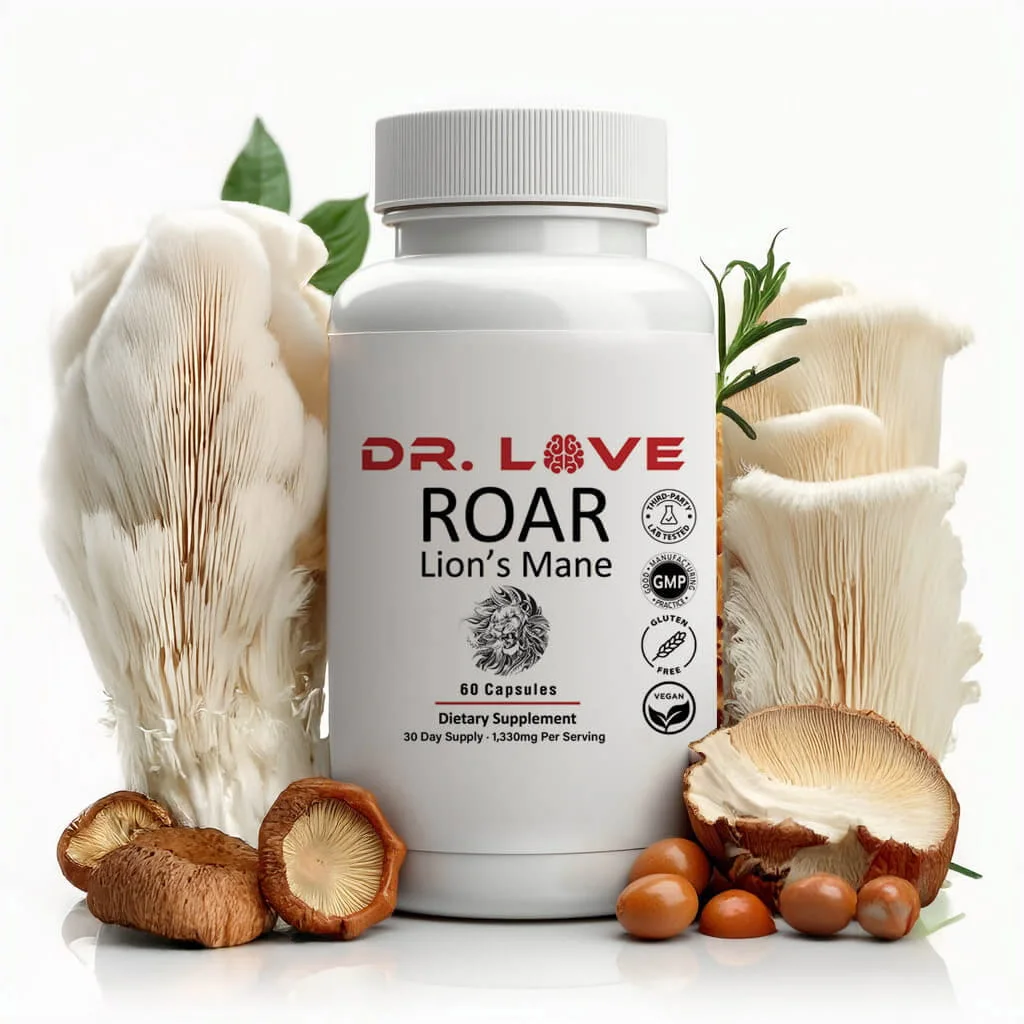
Roar Lion’s Mane is a single-ingredient capsule — 1,330 mg of Lion’s Mane a day, no caffeine, no stimulants — that fits neatly into a calmer daily routine. Backed by a 180-day money-back guarantee.
See Roar Packages
Where a daily nootropic routine fits in
Once your foundations are in place — sleep, movement, breathing, boundaries — some people like to add a simple daily supplement as part of their focus routine. Lion’s Mane (Hericium erinaceus) is an edible functional mushroom that has become popular in the nootropic world, and many people take it as a small, consistent daily habit rather than a quick fix.
It is important to be clear about what it is and is not. Lion’s Mane is a food-based supplement, not a treatment for stress, anxiety or any medical condition, and it will not undo the effects of a chronically overloaded life. What it can be is one calm, stimulant-free part of a wider routine — something to pair with the habits above, not a replacement for them. If you want the background, our explainer on what Lion’s Mane does for your brain walks through the compounds people talk about. And if you would like to try it, you can learn more about Roar Lion’s Mane on our homepage.
The bottom line
Stress affects memory and focus because the body’s survival response — brilliant in a real emergency — crowds out your working memory and scatters your attention when it runs all day long. The forgetfulness and fog that follow are a normal reaction, not a personal failing. The good news is that the same everyday habits that lower stress also protect your memory and focus: breathe slowly, move often, sleep well, set boundaries, stay hydrated, and keep a steady routine. Layer a calm daily habit on top if you like — but build the foundations first, and give yourself time. If stress is persistent or overwhelming, please reach out to a healthcare professional.
FAQ
Can stress really cause memory problems?
Yes, everyday stress commonly affects memory. When you are stressed your attention narrows and your working memory gets crowded, so information is harder to take in and recall. Most stress-related forgetfulness eases once the pressure lifts and you rest, but ongoing high stress is worth discussing with a doctor.
Why can’t I focus when I’m stressed?
Stress triggers a fight-or-flight response that pulls your attention toward whatever feels threatening and away from the task in front of you. That is helpful in a real emergency but unhelpful when you are trying to concentrate on ordinary work, which is why a stressed mind feels scattered.
How can I calm my mind quickly?
Slow breathing is one of the fastest everyday tools. Breathing out for longer than you breathe in for a minute or two can help settle the body’s stress response. A short walk, stepping away from screens, and a glass of water also help many people reset.
Does Lion’s Mane help with stress?
Lion’s Mane is a functional mushroom people take as a daily habit for focus and mental clarity, not a treatment for stress or anxiety. It is best thought of as one small part of a wider routine that also includes sleep, movement and sensible boundaries. Talk to your doctor about persistent stress.
How long does stress-related brain fog last?
It varies from person to person. Short bursts of stress tend to clear within hours once you rest and recover. Longer periods of pressure can leave you feeling foggy for days or weeks. If it persists or worries you, speak with a healthcare professional.
References
- McEwen BS. “Central effects of stress hormones in health and disease: Understanding the protective and damaging effects of stress and stress mediators.” Eur J Pharmacol, 2008. PubMed 18282566
- Lupien SJ et al. “Effects of stress throughout the lifespan on the brain, behaviour and cognition.” Nat Rev Neurosci, 2009. PubMed 19401723
- Rasch B et al. “About sleep's role in memory.” Physiol Rev, 2013. PubMed 23589831
- National Institute of Mental Health. “I’m So Stressed Out! Fact Sheet.” www.nimh.nih.gov
- American Psychological Association. “Stress effects on the body.” www.apa.org
† These statements have not been evaluated by the Food and Drug Administration. This product is not intended to diagnose, treat, cure or prevent any disease. This article is for general information only and is not medical advice. Affiliate disclosure: Roar Lion’s Mane is an independent guide, not the manufacturer or seller. Some links on this page are affiliate links and we may earn a commission at no extra cost to you if you buy through them.