Home › Blog › How Exercise Boosts Your Brain, Memory and Focus
Lifestyle & HabitsHow Exercise Boosts Your Brain, Memory and Focus
| The big idea | Moving your body is one of the most reliable ways to support memory, focus and mood. |
| Why it works | Exercise boosts blood flow, growth signals and feel-good chemistry while lowering stress hormones. |
| How much | Aim for about 150 minutes of moderate activity a week — but even a ten-minute walk helps. |
| Where supplements fit | A daily habit like Lion’s Mane can sit alongside movement — never in place of it. |
Ask most people what exercise is for and they will say fitness, strength or weight. All true — but there is a quieter benefit that rarely makes the poster on the gym wall: your mind. How exercise boosts your brain is one of the best-supported stories in everyday health, and it is remarkably practical. You do not need a marathon or a gym membership to feel it; you need movement, done often enough to become a habit.
This guide explains what exercise actually does for memory and focus, how much you really need, the everyday routines that make it stick, and where a simple daily supplement like Lion’s Mane fits into an active lifestyle.
Why movement is such good news for your brain
The brain is a hungry organ. It makes up a small fraction of your body weight but consumes a large share of your energy and oxygen, and it depends on a steady, well-supplied blood flow to do its job. Exercise is one of the most direct ways to serve that need — when you move, your heart pumps more blood, and more of it reaches the brain carrying oxygen and fuel. That alone is part of why a brisk walk so often feels like someone wiped the fog off a window.
But the effect goes deeper than a temporary boost. Regular physical activity encourages the release of natural growth signals that support the health and maintenance of brain cells and the connections between them. Scientists are especially interested in a family of molecules that act a bit like fertiliser for neurons, helping the brain stay adaptable. You do not need to memorise the biochemistry — the takeaway is simple: movement helps create the conditions in which a brain learns, remembers and focuses well. A review of exercise and cognition describes fitness as one of the few everyday levers with consistent effects across attention, memory and executive function Hillman CH et al. (Nat Rev Neurosci, 2008).
How exercise boosts your brain day to day
Sharper focus and attention
A single bout of moderate exercise can lift attention and mental clarity for a meaningful window afterward. That is why so many people find their best ideas arrive on a walk, and why a short movement break between demanding tasks so reliably clears a stalled mind. If focus is your main goal, this pairs naturally with our guide to improving focus and concentration naturally.
Better memory and learning
Exercise supports the parts of the brain most involved in forming and retaining memories. Learning something new tends to stick better when your body is active on a regular basis, which is one reason movement and study go so well together. Sleep does the overnight filing, and movement helps prepare the ground — our article on how sleep affects memory and focus explains the night shift side of that partnership. In a year-long randomised trial in older adults, moderate aerobic walking was associated with a measurable increase in hippocampal volume alongside improved spatial memory Erickson KI et al. (Proc Natl Acad Sci U S A, 2011).
Steadier mood and lower stress
Movement lifts mood-related chemistry and helps bring stress hormones back down after they spike. A calmer, more settled nervous system leaves more mental bandwidth for clear thinking. This is a big reason exercise is such an effective antidote to the scattered, wired feeling that chronic stress creates.
More energy, less afternoon fog
It sounds paradoxical, but spending energy on movement tends to give you more energy back across the day. Regular activity is one of the most dependable ways to soften the mid-afternoon dip — a topic we cover in what causes the afternoon energy slump.
How much exercise do you actually need?
Public-health guidance offers a helpful anchor: roughly 150 minutes of moderate-intensity activity a week — think brisk walking, cycling or anything that raises your heart rate and breathing a little — plus a couple of sessions that work your muscles. If that sounds like a lot, break it down: 150 minutes is about 20–25 minutes a day, or three brisk half-hour walks plus a bit more. That figure comes from the U.S. Physical Activity Guidelines for Americans, 2nd edition, which also stresses that some activity is better than none.
Just as important is this: you do not have to hit the target to benefit. Short bouts count. A ten-minute walk can noticeably sharpen focus, and several small movement breaks across a day add up. For your brain, the enemy is not low intensity — it is prolonged stillness. Consistency beats intensity almost every time.
Everyday routines that make it stick
The best brain-boosting exercise plan is the one you will actually repeat. A few practical ways to build movement into an ordinary week:
- Anchor a daily walk to something you already do. After lunch, after the school run, or as a hard stop at the end of the workday.
- Use movement as a mental reset. When focus stalls, a brisk five-to-ten-minute walk often works better than pushing harder at the desk.
- Take the aerobic base seriously. Brisk walking, cycling or swimming a few times a week is a reliable foundation for brain and body alike.
- Add a little strength work. Two short sessions a week of bodyweight or resistance training rounds things out.
- Choose something you enjoy. Dancing, sport, hiking or gardening all count — enjoyment is what keeps a habit alive.
Notice that none of this requires special equipment or a dramatic lifestyle overhaul. The people who get the most brain benefit from exercise are simply the ones who keep moving, week after week.
Round out your active routine
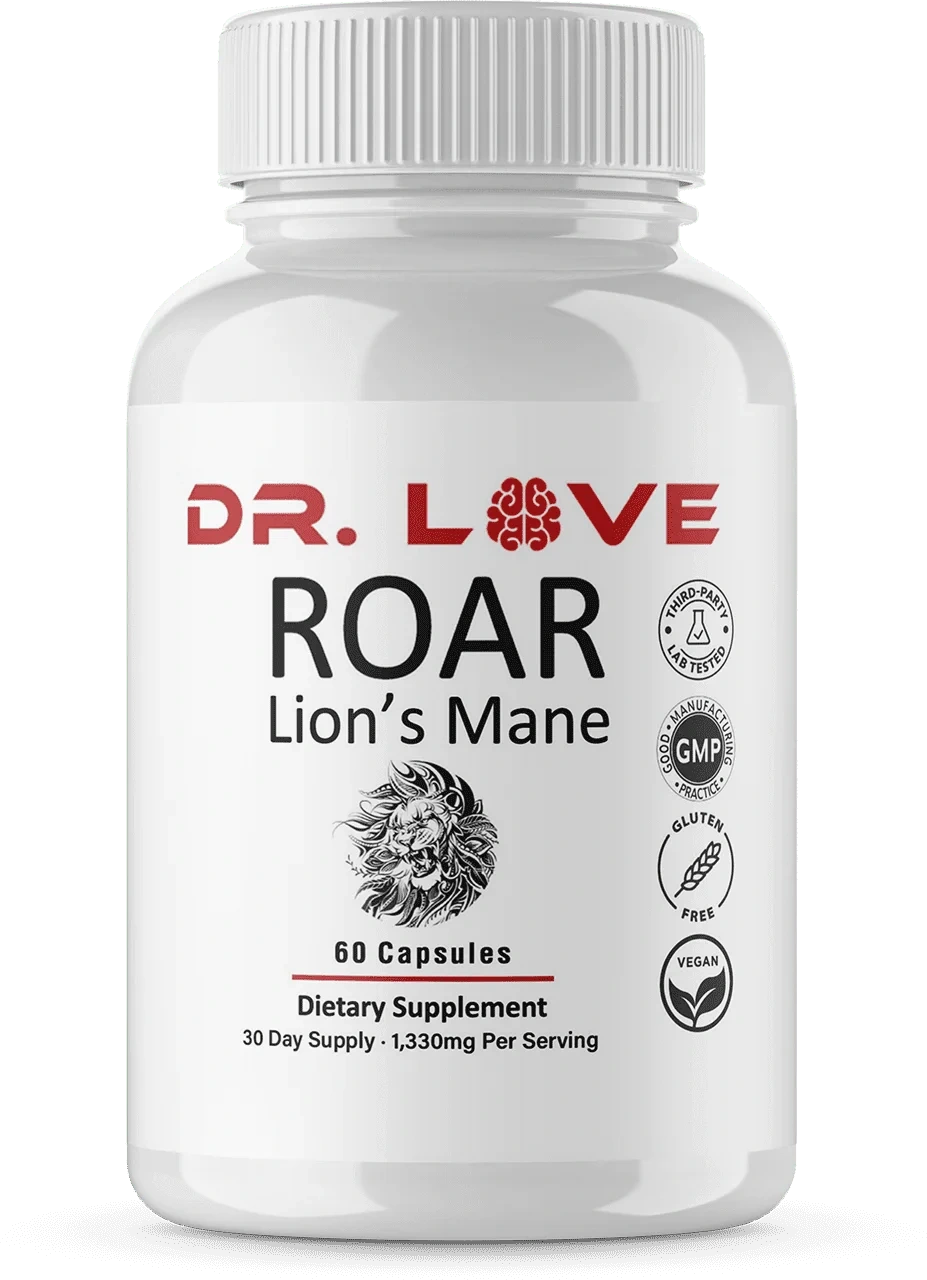
Roar Lion’s Mane is a clean, single-ingredient capsule — 1,330 mg of Lion’s Mane a day, no stimulants — that fits neatly into a routine built around movement, sleep and good food. Vegan, made in the USA, and backed by a 180-day money-back guarantee.
Where Lion’s Mane fits alongside exercise
Movement does the heavy lifting for your brain, but many people like to build a broader daily routine around it. Lion’s Mane (Hericium erinaceus) is an edible functional mushroom taken as a simple daily wellbeing habit — not a pre-workout, not a stimulant, and not a treatment. Because it contains no caffeine, it does not interfere with sleep or add to the wired feeling some workout supplements create.
The honest framing matters: Lion’s Mane is a food-derived supplement that complements healthy habits rather than replacing them. It cannot substitute for moving your body, sleeping well or eating sensibly. If you would like the full background on the mushroom, see our explainer on what Lion’s Mane does for your brain. And if brain fog is part of your picture, our guide to what causes brain fog and how to clear it lists movement among the most reliable fixes.
A sensible note before you lace up
Exercise is one of the safest, most rewarding things most people can do for body and mind. That said, if you are new to activity, returning after a long break, pregnant, or living with a health condition, it is wise to check with a qualified healthcare professional before starting a new programme — and to build up gradually. This article is general information, not medical advice.
FAQ
How does exercise improve memory and focus?
Movement increases blood flow to the brain, delivering more oxygen and fuel, and it encourages the release of growth signals that support healthy brain cells. It also lifts mood-related chemistry and reduces stress hormones, which together make it easier to concentrate and to lay down new memories.
How much exercise do you need for brain benefits?
General public-health guidance suggests around 150 minutes of moderate activity a week, such as brisk walking, plus some strengthening work. The good news is that even short bouts count — a ten-minute walk can noticeably lift focus, and consistency matters more than intensity.
What is the best exercise for the brain?
The best exercise is the one you will actually do regularly. Aerobic activity such as brisk walking, cycling or swimming is a reliable foundation, strength training adds further benefits, and coordination-based activities like dancing add a mental challenge. A mix keeps things sustainable and enjoyable.
Does a quick walk really help focus?
Yes. A short walk raises blood flow, breaks up mental fatigue and often clears the head within minutes. Many people use a brief walk as a reset between demanding tasks, and it pairs well with getting daylight and fresh air.
Where does Lion’s Mane fit alongside exercise?
Lion’s Mane is a functional mushroom taken as a daily wellbeing habit, not a workout supplement or a stimulant. Some people include it in a routine built around movement, sleep and good food. It complements healthy habits rather than replacing them, and individual experiences vary.
Does Lion’s Mane contain caffeine?
No. Lion’s Mane is a functional mushroom, not a stimulant, and contains no caffeine. A single-ingredient product like Roar has no added stimulants of any kind.
References
- Hillman CH et al. “Be smart, exercise your heart: exercise effects on brain and cognition.” Nat Rev Neurosci, 2008. PubMed 18094706
- Erickson KI et al. “Exercise training increases size of hippocampus and improves memory.” Proc Natl Acad Sci U S A, 2011. PubMed 21282661
- U.S. Department of Health & Human Services. “Physical Activity Guidelines for Americans, 2nd edition.” health.gov
- MedlinePlus (U.S. National Library of Medicine). “Exercise and Physical Fitness.” medlineplus.gov
The Roar Lion’s Mane Research Team is an independent group that writes plain-English guides on nootropics, functional mushrooms and everyday brain-health habits. We read the primary literature, avoid hype, and are careful to separate what is well established from what is still being studied. Our articles are reviewed for accuracy before publication and are intended as general information, not medical advice.
† These statements have not been evaluated by the Food and Drug Administration. This product is not intended to diagnose, treat, cure or prevent any disease. This article is for general information only and is not medical advice. Affiliate disclosure: Roar Lion’s Mane is an independent guide, not the manufacturer or seller. Some links on this page are affiliate links and we may earn a commission at no extra cost to you if you buy through them.