Home › Blog › How Caffeine Affects Your Focus, Energy and Brain
Symptoms & CausesHow Caffeine Affects Your Focus, Energy and Brain
| What caffeine does | It blocks the “drowsy” signal (adenosine), so you feel more alert — it postpones tiredness rather than adding energy. |
| The upside | Genuine short-term boosts to alertness, attention and reaction time, especially when you are tired. |
| The downside | Jitters, anxiety, afternoon crashes and disrupted sleep if you take too much or too late. |
| The calm alternative | Sensible caffeine habits plus caffeine-free options like Lion’s Mane for a routine without the wired feeling. |
Coffee is the most popular focus tool on the planet, and for good reason — it works. But if you have ever felt your heart race after a third cup, hit a wall of tiredness by mid-afternoon, or lain awake at midnight regretting that 4 p.m. espresso, you already know the story is not entirely rosy. Understanding how caffeine affects your focus and your brain helps you get the genuine benefits while sidestepping the jitters and crashes.
This guide explains what caffeine actually does inside your head, why it can backfire, how much is sensible, and the calmer habits — including caffeine-free options — that keep you sharp without the wired feeling.
What caffeine actually does in your brain
The key to understanding caffeine is a molecule called adenosine. From the moment you wake, adenosine slowly builds up in your brain, and as it accumulates it makes you feel progressively more drowsy. It is one of the body’s natural ways of tracking how long you have been awake and nudging you toward rest.
Caffeine works by slipping into the same docking sites that adenosine uses and blocking them. With the “you are getting tired” signal muffled, you feel more alert, more awake and better able to concentrate. This is the crucial nuance most people miss: caffeine does not create energy. It masks the feeling of tiredness. The adenosine is still there, waiting — which is exactly why the crash arrives when the caffeine wears off and all that backed-up drowsiness lands at once.
At the same time, caffeine gives a modest lift to the body’s alerting and stress chemistry. In the right dose that feels like sharp, motivated focus. In too large a dose it feels like a racing heart and frayed nerves.
How caffeine affects your focus: the genuine upsides
Used sensibly, caffeine has real, well-documented benefits for the mind: A large review of caffeine and performance concluded that moderate doses reliably improve vigilance and reaction time, with the clearest gains in people who are tired or sleep-restricted McLellan TM et al. (Neurosci Biobehav Rev, 2016).
- Faster, sharper alertness. Especially when you are under-slept or flagging, caffeine reliably lifts wakefulness.
- Better attention and reaction time. Tasks that demand sustained vigilance often improve with a moderate dose.
- A mood and motivation nudge. Many people find a cup makes a dull task feel more approachable.
None of this is imaginary — caffeine is one of the most studied and effective everyday stimulants there is. The trouble starts not with caffeine itself but with how easily we overshoot the dose and mistime it.
Why caffeine can backfire
Jitters, anxiety and a racing heart
Because caffeine turns up the body’s stress chemistry, too much can tip pleasant alertness into restlessness, a pounding heart and outright anxiety. If you are naturally sensitive, drink it on an empty stomach, or stack cups quickly, you are more likely to feel this edge.
The afternoon crash
When the caffeine clears, the adenosine it was blocking floods back, and the tiredness you postponed arrives — often right in the middle of the afternoon. Reaching for another cup restarts the cycle and can leave you more depleted by evening. If that mid-day slump is a regular feature of your day, our guide to what causes the afternoon energy slump digs into the full picture. That rebound sits on top of a natural dip in alertness that the two-process model of sleep regulation describes as a normal feature of the body clock, not a personal failing Borbély AA et al. (J Sleep Res, 2016).
Disrupted sleep — the hidden cost
This is the big one. Caffeine lingers in your system for many hours, so an afternoon or evening cup can quietly erode the depth and quality of your sleep even if you fall asleep fine. Worse sleep means more tiredness the next day, which means more caffeine — a self-reinforcing loop. Our article on how sleep affects memory and focus explains why protecting sleep is so central to staying sharp. A systematic review of coffee, caffeine and sleep found measurable disruption to sleep onset and total sleep time even when caffeine was taken many hours before bed Clark I et al. (Sleep Med Rev, 2017).
Tolerance and dependence
With regular use, the brain adapts and you need more caffeine for the same effect, while going without can bring headaches and grogginess. That does not make caffeine bad — it simply means a lot of what feels like a “boost” can be you topping up to normal rather than climbing above it.
How much caffeine is sensible?
For most healthy adults, up to about 400 mg of caffeine a day — roughly four cups of coffee — is generally considered moderate. But that is an average, not a target. Sensitivity varies enormously: some people are wired by a single espresso, others barely notice two. A few habits keep caffeine on your side:
- Find your personal ceiling and stay comfortably under it rather than chasing the maximum.
- Set a cut-off time, ideally by early afternoon, so caffeine does not undermine your sleep.
- Pair it with food and water to soften the spike and stay hydrated.
- Do not use it to mask real sleep debt. Caffeine borrows against tomorrow; it does not repay the loan.
A calmer focus habit
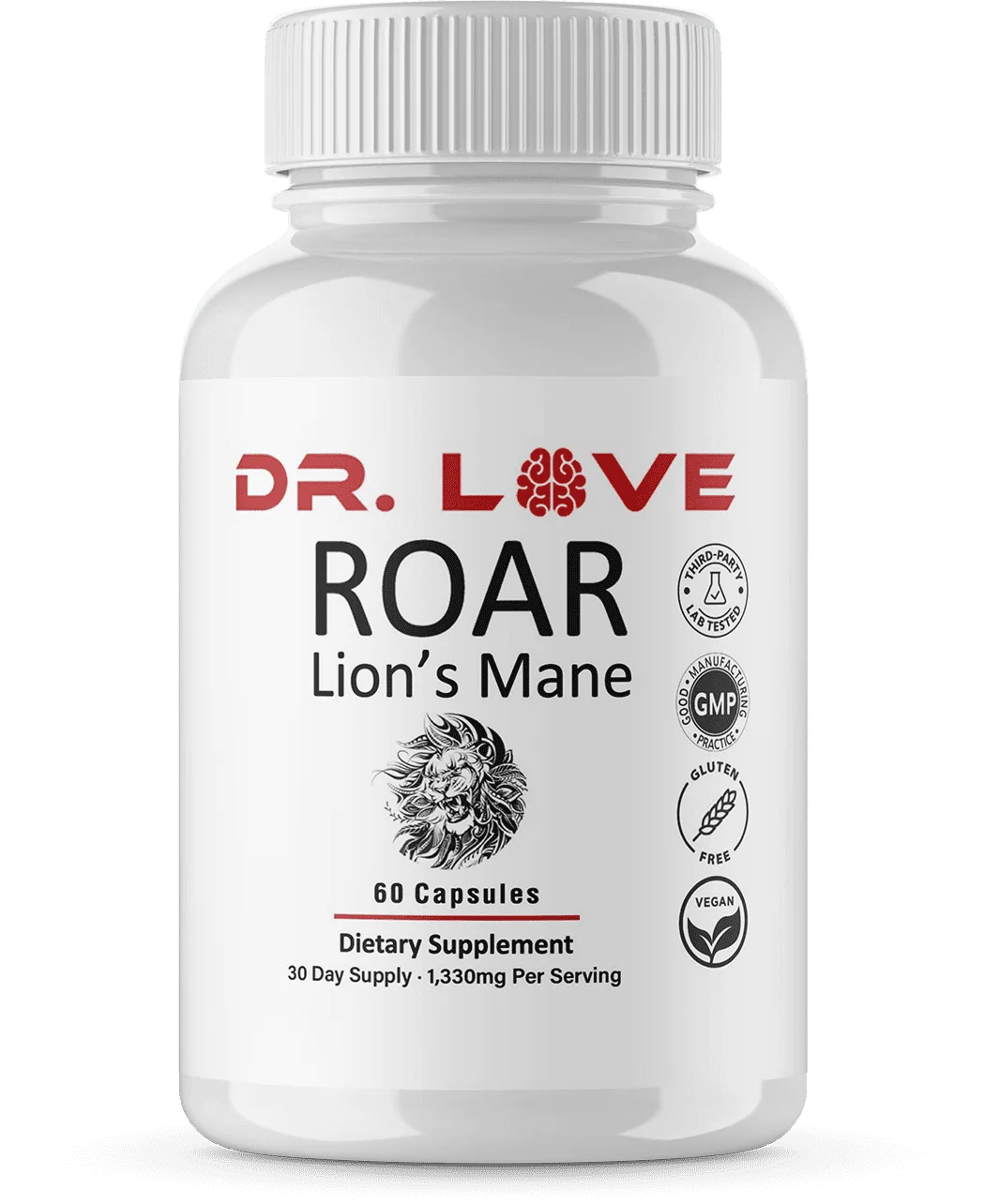
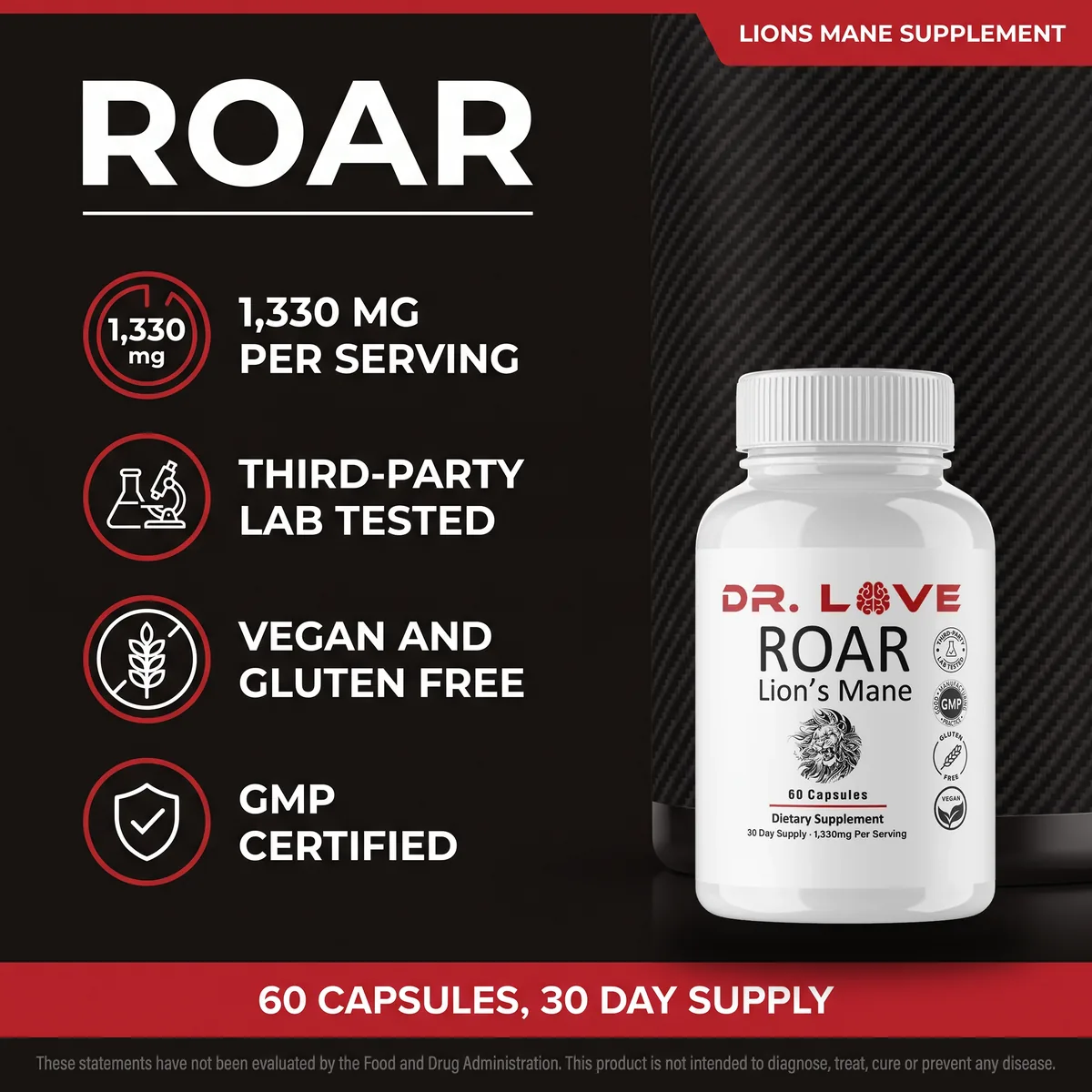
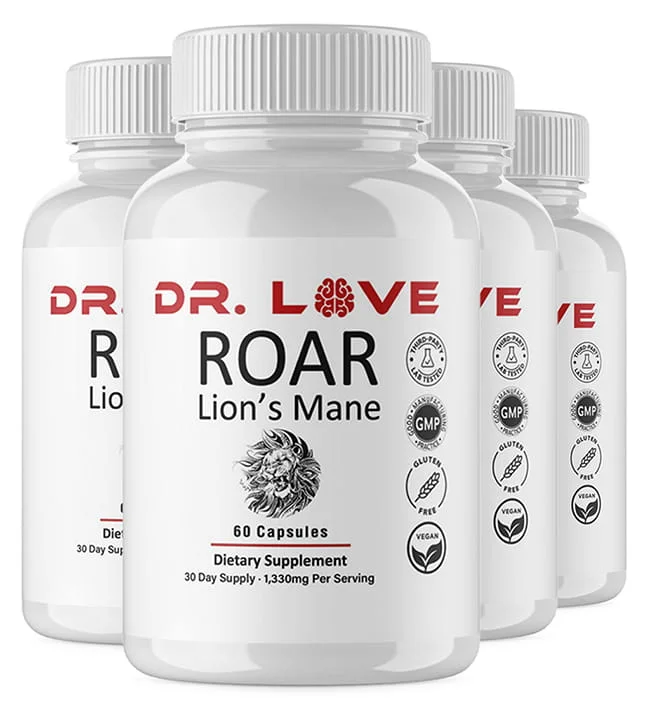
Roar Lion’s Mane is a clean, single-ingredient capsule — 1,330 mg of Lion’s Mane a day and zero caffeine — for people who want to support a focus routine without adding to the wired, jittery feeling. Vegan, made in the USA, and backed by a 180-day money-back guarantee.
Calmer ways to stay sharp — with less caffeine
If caffeine has started to cost you more than it gives — poor sleep, afternoon crashes, an anxious edge — the fix is rarely to quit cold turkey. It is to lean less heavily on it and build a broader routine that supports focus in calmer ways:
- Protect your sleep first. Well-rested people simply need less caffeine.
- Move your body. A brisk walk lifts alertness without a crash — see how to improve focus and concentration naturally.
- Hydrate. Mild dehydration mimics tiredness and sends people reaching for coffee they do not need.
- Consider a caffeine-free daily habit. Some people add Lion’s Mane (Hericium erinaceus), an edible functional mushroom taken as a calm daily routine rather than a stimulant hit.
Because it contains no caffeine, Lion’s Mane will not keep you up at night or add to the jitters — which is exactly why some people pair a morning coffee with a Lion’s Mane habit and skip the afternoon top-ups. If you want the full background on the mushroom, see our explainer on what Lion’s Mane does for your brain. Just remember it is a food-derived supplement, not a treatment, and it works best on top of good sleep, movement and hydration rather than in place of them.
A quick safety note
Caffeine affects everyone differently, and some people should be especially careful — including those who are pregnant or nursing, sensitive to stimulants, or living with heart or anxiety conditions. If caffeine reliably makes you feel unwell, or you are unsure how much is right for you, talk to a qualified healthcare professional. This article is general information, not medical advice.
FAQ
How does caffeine affect focus?
Caffeine blocks adenosine, a chemical that builds up through the day and makes you feel drowsy. By temporarily masking that drowsiness signal, caffeine helps you feel more alert and can improve attention and reaction time — especially when you are tired. It does not add energy so much as postpone the feeling of tiredness.
Why does coffee make me jittery or anxious?
Caffeine also nudges up the body’s stress chemistry, which can tip into a racing heart, restlessness and anxiety if you are sensitive, have taken too much, or drink it on an empty stomach. Sensitivity varies a lot from person to person, so your comfortable dose may be very different from someone else’s.
How much caffeine is too much?
For most healthy adults, up to about 400 mg of caffeine a day — roughly four cups of coffee — is generally considered moderate. Individual tolerance varies, and less is wise if you are pregnant, sensitive, or notice jitters or sleep problems. Always check with a healthcare professional if you are unsure.
How can I avoid the caffeine crash?
Keep your intake moderate, avoid caffeine late in the day so it does not disturb sleep, drink water alongside it, and do not use it to paper over a genuine sleep debt. Pairing coffee with food and stopping by early afternoon are two of the simplest ways to smooth out the crash.
Does Lion’s Mane have caffeine?
No. Lion’s Mane is a functional mushroom, not a stimulant, and contains no caffeine. Some people take it as a calm daily habit precisely because it supports their focus routine without adding to the jittery, wired feeling that too much caffeine can cause. Individual experiences vary.
References
- McLellan TM et al. “A review of caffeine's effects on cognitive, physical and occupational performance.” Neurosci Biobehav Rev, 2016. PubMed 27612937
- Clark I et al. “Coffee, caffeine, and sleep: A systematic review of epidemiological studies and randomized controlled trials.” Sleep Med Rev, 2017. PubMed 26899133
- Borbély AA et al. “The two-process model of sleep regulation: a reappraisal.” J Sleep Res, 2016. PubMed 26762182
- MedlinePlus (U.S. National Library of Medicine). “Caffeine.” medlineplus.gov
- Harvard T.H. Chan School of Public Health. “The Nutrition Source: Caffeine.” nutritionsource.hsph.harvard.edu
The Roar Lion’s Mane Research Team is an independent group that writes plain-English guides on nootropics, functional mushrooms and everyday brain-health habits. We read the primary literature, avoid hype, and are careful to separate what is well established from what is still being studied. Our articles are reviewed for accuracy before publication and are intended as general information, not medical advice.
† These statements have not been evaluated by the Food and Drug Administration. This product is not intended to diagnose, treat, cure or prevent any disease. This article is for general information only and is not medical advice. Affiliate disclosure: Roar Lion’s Mane is an independent guide, not the manufacturer or seller. Some links on this page are affiliate links and we may earn a commission at no extra cost to you if you buy through them.