Home › Blog › How Gut Health Affects Your Brain, Mood and Focus
Symptoms & CausesHow Gut Health Affects Your Brain, Mood and Focus
| The big idea | Your gut and brain are wired together through the “gut-brain axis” and talk to each other all day long. |
| Why it matters | What you eat and how well you digest it can shape mood, energy, focus and that foggy feeling. |
| What helps | More fibre and plants, fermented foods, less ultra-processed food and sugar, plus sleep, movement and calm. |
| Where supplements fit | A daily habit like Lion’s Mane can sit on top of a good diet — never in place of one. |
If you have ever felt butterflies before a big moment, lost your appetite under stress, or noticed your mood dip after a week of takeaways, you already have first-hand experience of how gut health affects your brain. The gut and the brain are not two separate systems that happen to live in the same body — they are in near-constant conversation. Understanding that conversation is one of the most useful things you can do for your everyday mood, energy and focus, because so much of it comes down to habits you control.
This guide walks through the gut-brain connection in plain English: what it is, how gut health affects your brain day to day, the everyday signs your digestion might be dragging on your mind, and the simple food and lifestyle habits that support both ends of the line.
The gut-brain connection, explained simply
Your digestive tract is lined with hundreds of millions of nerve cells — so many that scientists sometimes call the gut the “second brain.” This network, the enteric nervous system, can run many of its own operations, but it also stays in close contact with the brain in your head. The two are joined by the gut-brain axis: a two-way communication network built from nerves, hormones, immune messengers and the chemistry of your gut microbes. A major review of the microbiota-gut-brain axis maps these routes in detail while cautioning that much of the mechanistic work is still animal research Cryan JF et al. (Physiol Rev, 2019).
The star player on that highway is the vagus nerve, a long nerve that carries signals in both directions between the gut and the brainstem. Alongside it, the trillions of bacteria living in your intestines — collectively, the gut microbiome — produce a remarkable range of chemical messengers, including compounds closely related to the ones your brain uses for mood and alertness. In other words, the microbes in your gut are not passive passengers. They are active participants in how you feel.
The crucial detail is that the line runs both ways. Digestion can influence your mood and concentration, and your mental state can just as easily influence your digestion. That is why a stressful morning can tie your stomach in knots, and why a rough patch with your gut can leave you feeling unusually flat or foggy.
How gut health affects your brain day to day
Mood and the serotonin link
Serotonin is one of the body’s key mood-related messengers, and a surprisingly large share of it is made in the gut rather than the brain. While gut serotonin and brain serotonin do different jobs, the fact that so much of this signalling chemistry is produced in the digestive tract is a vivid reminder of how tightly the two systems are linked. When your gut environment is healthy and well fed, that whole signalling system tends to run more smoothly. A large population study of gut bacteria and wellbeing reported associations between certain microbial groups and quality-of-life scores, though association is not causation Valles-Colomer M et al. (Nat Microbiol, 2019).
Focus, energy and inflammation
A gut that is out of balance can nudge the immune system toward a low-grade, background level of inflammation. That kind of quiet inflammation is associated with feeling mentally sluggish, tired and unfocused. Feed your gut well and you help keep that background hum down — which many people notice as steadier energy and a clearer head.
Brain fog and digestion
Ever eaten a heavy, sugar-laden meal and felt your thoughts turn to treacle an hour later? Digestion, blood-sugar swings and gut comfort all feed into that cloudy state. If foggy thinking is a regular visitor for you, it is worth reading our companion guide on what causes brain fog and how to clear it, because diet and digestion are recurring characters in that story.
The stress two-way street
Stress does not just live in your head. It changes how your gut moves, how sensitive it feels, and even the mix of bacteria it hosts. And because the axis runs both ways, an unsettled gut can send stress-like signals back up to the brain. This loop is a big reason mood and digestion so often rise and fall together, and it overlaps with our article on how stress affects memory and focus.

Everyday signs your gut might be affecting your mind
None of these on their own proves anything — bodies are complicated — but when several show up together, the gut-brain axis is often worth a look:
- Mood that tracks your meals. Feeling noticeably flatter or more irritable after stretches of poor eating.
- Post-meal fog. A dependable slump in clarity after large, heavy or very sugary meals.
- Digestion that reacts to stress. A stomach that clearly responds to your emotional state.
- Low energy on a low-fibre diet. Feeling drained during weeks built around ultra-processed convenience food.
- Cravings that hijack focus. Sugar and refined-carb cravings that pull your attention off task.
Think of these as gentle prompts to look at your habits, not as a diagnosis. Persistent digestive or mood symptoms always deserve a proper conversation with a healthcare professional.
Everyday habits for a healthier gut-brain axis
The encouraging news about how gut health affects your brain is that the levers are largely everyday ones. You do not need an exotic protocol — you need a handful of consistent habits.
Eat more fibre and a wider range of plants
Fibre is the single most important food for a healthy microbiome, because your gut bacteria ferment it into beneficial compounds. Variety matters as much as quantity: a broad mix of vegetables, fruit, whole grains, beans and nuts feeds a broader, more resilient community of microbes. A useful rule of thumb is to aim for as many different plants across a week as you comfortably can.
Add fermented foods
Fermented foods such as live yoghurt, kefir, sauerkraut, kimchi and miso introduce beneficial microbes and the compounds they produce. Adding a small serving regularly is an easy, food-first way to support gut diversity.
Feed the good bacteria with prebiotics
Prebiotic fibres are the specific fuels that helpful bacteria love. You will find them in onions, garlic, leeks, oats, bananas, apples, beans and lentils. Working a few of these into your normal cooking quietly keeps your microbiome well fed.
Cut back on ultra-processed food and excess sugar
Diets heavy in ultra-processed food and added sugar tend to be low in the fibre your gut wants and can encourage a less favourable balance of microbes. You do not have to be perfect — simply shifting the ratio toward whole foods most of the time makes a real difference. Our roundup of the best foods for memory and brain health doubles as a gut-friendly shopping list.
Do not forget sleep, movement, stress and water
The microbiome responds to your whole lifestyle, not just your plate. Regular movement supports a more diverse gut, good sleep keeps the whole system in rhythm, managing stress calms the two-way loop, and staying hydrated keeps everything moving. These basics reinforce each other, which is exactly why building a few solid daily habits beats chasing any single fix.
Support your everyday routine
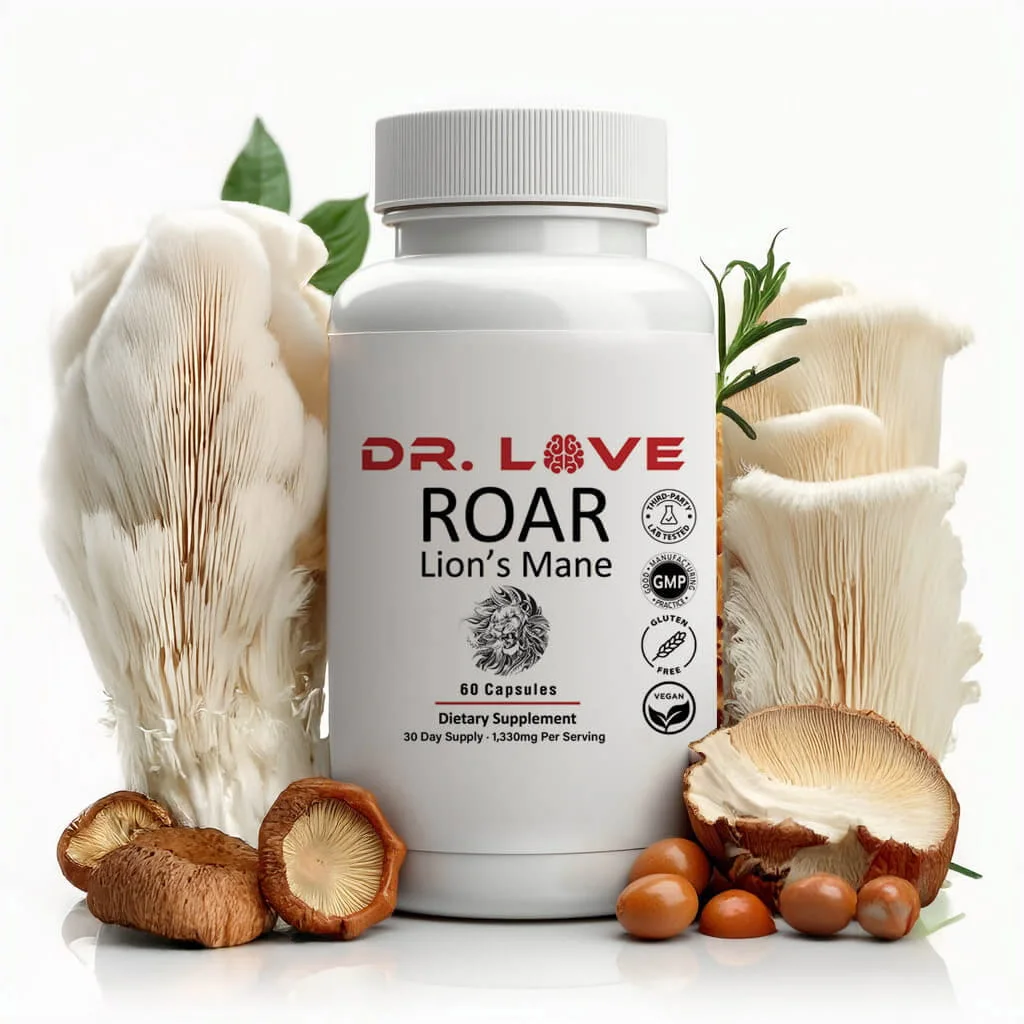
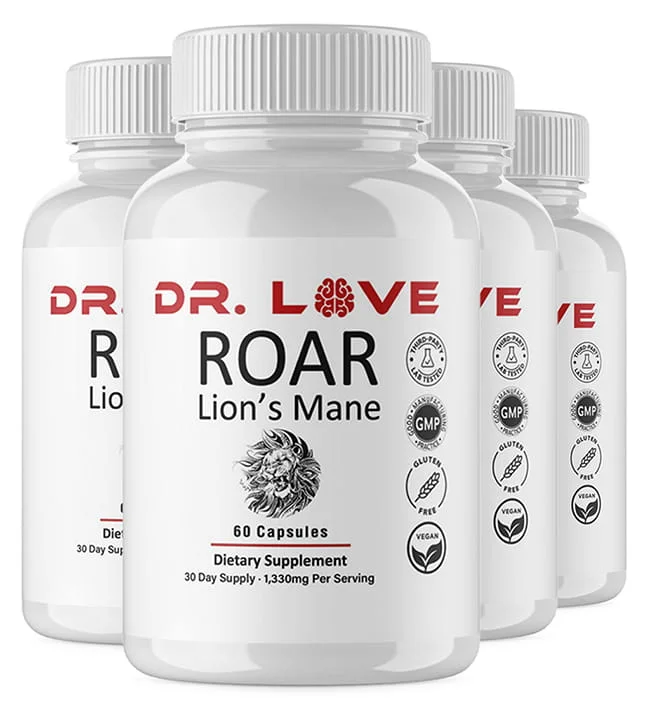
Roar Lion’s Mane is a clean, single-ingredient capsule — 1,330 mg of Lion’s Mane a day, no stimulants — that slots neatly into a gut-friendly, whole-food routine. Vegan, made in the USA, and backed by a 180-day money-back guarantee.
Where Lion’s Mane fits into a gut-and-brain routine
Once the fundamentals are in place, some people like to add a daily functional-mushroom habit. Lion’s Mane (Hericium erinaceus) is an edible mushroom that has been eaten as food for centuries, long before it appeared in capsules. Like all mushrooms, it naturally contains beta-glucan fibres, and it is taken as a simple daily wellbeing habit rather than a stimulant or a treatment.
It is worth being honest about the boundaries here: Lion’s Mane is a food-derived supplement, not a cure for anything, and it is not a substitute for a fibre-rich diet, good sleep and stress management. It belongs on top of a solid routine. If you want the full background on the mushroom itself, see our explainer on what Lion’s Mane does for your brain, and for the wider picture of daily energy, our piece on why you feel mentally tired all the time pairs well with everything here. The chemistry of Hericium erinaceus has been reviewed in the food-science literature, which describes its compounds without claiming clinical benefit Friedman M (J Agric Food Chem, 2015).
When gut or mood symptoms deserve a professional
Everyday fluctuations in digestion and mood are normal and usually respond well to the habits above. But symptoms that are severe, persistent, or paired with unexplained changes — ongoing digestive trouble, significant low mood, unintended weight change — are worth discussing with a qualified healthcare professional rather than self-managing. Certain conditions and medications affect both the gut and the mind, and those deserve proper assessment. This article is general wellbeing information, not medical advice.
FAQ
What is the gut-brain axis?
The gut-brain axis is the two-way communication network that links your digestive system and your brain. They talk to each other constantly through the vagus nerve, hormones, immune signals and chemical messengers produced by the trillions of microbes living in your gut. Because the line runs both ways, digestion can influence mood and focus, and stress can influence digestion.
Can poor gut health cause brain fog and low mood?
For many people an unbalanced diet, low fibre, too much ultra-processed food and disrupted digestion can go hand in hand with feeling foggy, flat or unfocused. The gut and brain share signalling pathways, so what happens in one often shows up in the other. This is general wellbeing information, not a diagnosis — persistent symptoms deserve a proper medical assessment.
What foods are best for the gut-brain connection?
A varied, mostly whole-food diet rich in fibre, plants and fermented foods such as yoghurt, kefir, sauerkraut and kimchi is a sensible foundation. Prebiotic fibres from onions, garlic, oats, beans and bananas feed helpful bacteria, while cutting back on excess sugar and ultra-processed food reduces the load on your system.
Does Lion’s Mane support gut health?
Lion’s Mane is an edible functional mushroom that naturally contains beta-glucan fibres, the same family of fibres found across mushrooms. It is used as a daily wellbeing habit rather than a treatment. It works best alongside a fibre-rich diet, good sleep and stress management, not instead of them. Individual experiences vary.
How long does it take to improve gut health?
The gut microbiome can begin to shift within days of a dietary change, but building a resilient, diverse gut is a longer project measured in weeks and months of consistent habits. Patience and consistency matter more than any single food or supplement.
Does Lion’s Mane contain caffeine?
No. Lion’s Mane is a functional mushroom, not a stimulant, and contains no caffeine. A single-ingredient product like Roar has no added stimulants of any kind.
References
- Cryan JF et al. “The Microbiota-Gut-Brain Axis.” Physiol Rev, 2019. PubMed 31460832
- Valles-Colomer M et al. “The neuroactive potential of the human gut microbiota in quality of life and depression.” Nat Microbiol, 2019. PubMed 30718848
- Friedman M. “Chemistry, Nutrition, and Health-Promoting Properties of Hericium erinaceus (Lion's Mane) Mushroom Fruiting Bodies and Mycelia and Their Bioactive Compounds.” J Agric Food Chem, 2015. PubMed 26244378
- Harvard T.H. Chan School of Public Health. “The Nutrition Source: Fiber.” nutritionsource.hsph.harvard.edu
- National Institutes of Health. “NIH Human Microbiome Project.” commonfund.nih.gov
The Roar Lion’s Mane Research Team is an independent group that writes plain-English guides on nootropics, functional mushrooms and everyday brain-health habits. We read the primary literature, avoid hype, and are careful to separate what is well established from what is still being studied. Our articles are reviewed for accuracy before publication and are intended as general information, not medical advice.
† These statements have not been evaluated by the Food and Drug Administration. This product is not intended to diagnose, treat, cure or prevent any disease. This article is for general information only and is not medical advice. Affiliate disclosure: Roar Lion’s Mane is an independent guide, not the manufacturer or seller. Some links on this page are affiliate links and we may earn a commission at no extra cost to you if you buy through them.