Home › Blog › Best Foods for Memory and Brain Health
Diet & LifestyleBest Foods for Memory and Brain Health
| The short version | The best foods for memory and brain health are oily fish, leafy greens, berries, nuts and seeds, eggs, whole grains and healthy fats — eaten as a consistent pattern. |
| The big idea | No single “superfood” matters as much as your overall eating pattern over months and years. |
| Foods to limit | Ultra-processed foods, added sugar and heavy refined carbs that spike and crash your energy. |
| Where mushrooms fit | Culinary and functional mushrooms like Lion’s Mane are nutritious whole foods and a popular daily habit. |
What you put on your plate feeds your brain just as much as the rest of your body. When people ask about the best foods for memory and brain health, they are often hoping for one magic ingredient — but the real answer is more encouraging than that. It is not about a single food; it is about a pattern of everyday brain foods that, eaten consistently, gives your mind the raw materials it needs to work well. Here is what that pattern looks like, food by food.
Why food matters for memory and focus
Your brain is an energy-hungry organ that never switches off. It relies on a steady supply of glucose for fuel, healthy fats to build and maintain its cells, and a wide range of vitamins, minerals and antioxidants to keep everything running smoothly. Feed it well and you support clear thinking; feed it a diet of sugar spikes and ultra-processed food and you invite the energy crashes that feel a lot like brain fog. Diet is one of the most controllable levers you have. Reviews of diet and cognition describe the brain as unusually sensitive to what the rest of the body is fed, because the nutrients that build cell membranes and signalling molecules all arrive through the diet Gómez-Pinilla F (Nat Rev Neurosci, 2008).
One important caveat up front: food supports brain health, but it is not a treatment for memory conditions and no single meal will transform your mind overnight. Think in terms of habits and months, not hacks and days.
The best foods for memory and brain health
Oily fish
Salmon, sardines, mackerel and trout are rich in omega-3 fatty acids, the healthy fats that make up a large part of the brain’s structure. Oily fish is one of the most consistently recommended brain foods, and a couple of servings a week is a common target.
Leafy green vegetables
Spinach, kale, rocket and other leafy greens deliver folate, vitamin K and a range of antioxidants. Diets high in leafy greens are among the most studied when it comes to supporting brain health as people age.
Berries
Blueberries, strawberries and blackberries are packed with colourful plant compounds called flavonoids. Berries are an easy, low-effort brain food — a handful on your breakfast or as a snack.
Nuts and seeds
Walnuts, almonds, pumpkin seeds and flax provide healthy fats, vitamin E and minerals like magnesium and zinc. They also make a satisfying snack that keeps energy steady between meals rather than spiking it.
Eggs
Eggs are a convenient source of choline and B vitamins, nutrients involved in normal brain function. They also anchor a protein-forward breakfast, which helps keep your morning focus even.
Whole grains
Oats, brown rice, quinoa and wholegrain bread release their energy slowly, giving your brain the steady glucose supply it prefers — the opposite of the spike-and-crash you get from refined carbs.
Extra-virgin olive oil and healthy fats
Olive oil, avocado and other unsaturated fats are cornerstones of the Mediterranean-style eating pattern that is so often linked with better long-term brain health.
Mushrooms, including functional mushrooms
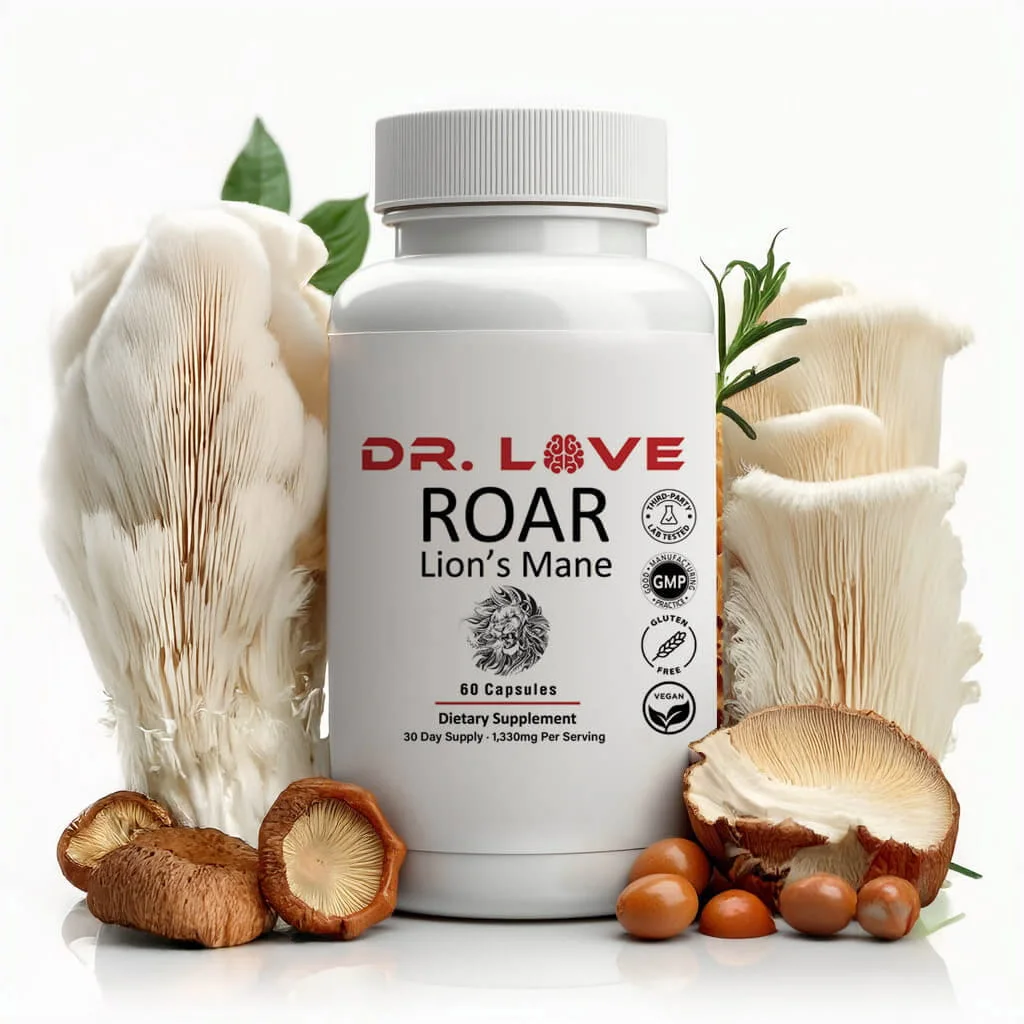
Everyday culinary mushrooms are a nutritious, low-calorie whole food. In the nootropic world, functional mushrooms like Lion’s Mane (Hericium erinaceus) have become especially popular — a mushroom eaten for centuries in East Asian cooking and now taken by many people as a simple daily supplement. If you are curious about it specifically, our guide to what Lion’s Mane does for your brain covers the details. A food-chemistry review of Hericium erinaceus catalogues the compounds that make it interesting to researchers, while being clear the work is preclinical rather than clinical Friedman M (J Agric Food Chem, 2015).
The pattern beats any single food
If you take one thing from this guide, make it this: the best foods for brain health work as a team. Researchers who study diet and cognition tend to look at whole eating patterns — such as the Mediterranean and MIND approaches — rather than isolated ingredients. Those patterns share the same shape: lots of vegetables and greens, regular oily fish, plenty of nuts, seeds, beans and whole grains, olive oil as the main fat, berries as the go-to fruit, and comparatively little ultra-processed food, added sugar or red and processed meat. That is the finding behind the MIND diet work: in a cohort study of older adults, closer adherence to a whole eating pattern tracked with a slower rate of cognitive decline over several years Morris MC et al. (Alzheimers Dement, 2015).
You do not need to follow any diet perfectly. Simply shifting more of your plate toward these foods, most days, is the realistic version of “eating for your brain.” A good share of that benefit is delivered through the digestive system, which is why how gut health affects your brain and mood is worth reading alongside this list.
Foods and habits worth limiting
- Added sugar and sugary drinks, which drive the energy spikes and crashes that sap concentration.
- Ultra-processed foods, which tend to crowd out the nutrient-dense whole foods your brain actually needs.
- Excess refined carbohydrates, like white bread and pastries eaten alone, which burn fast and leave you flat.
- Skipping meals, which starves your brain of steady fuel and often leads to overeating the wrong things later.
Getting these under control does as much for day-to-day sharpness as adding any single brain food. It also supports steadier energy, which ties directly into why you feel mentally tired all the time.
A simple functional-mushroom habit
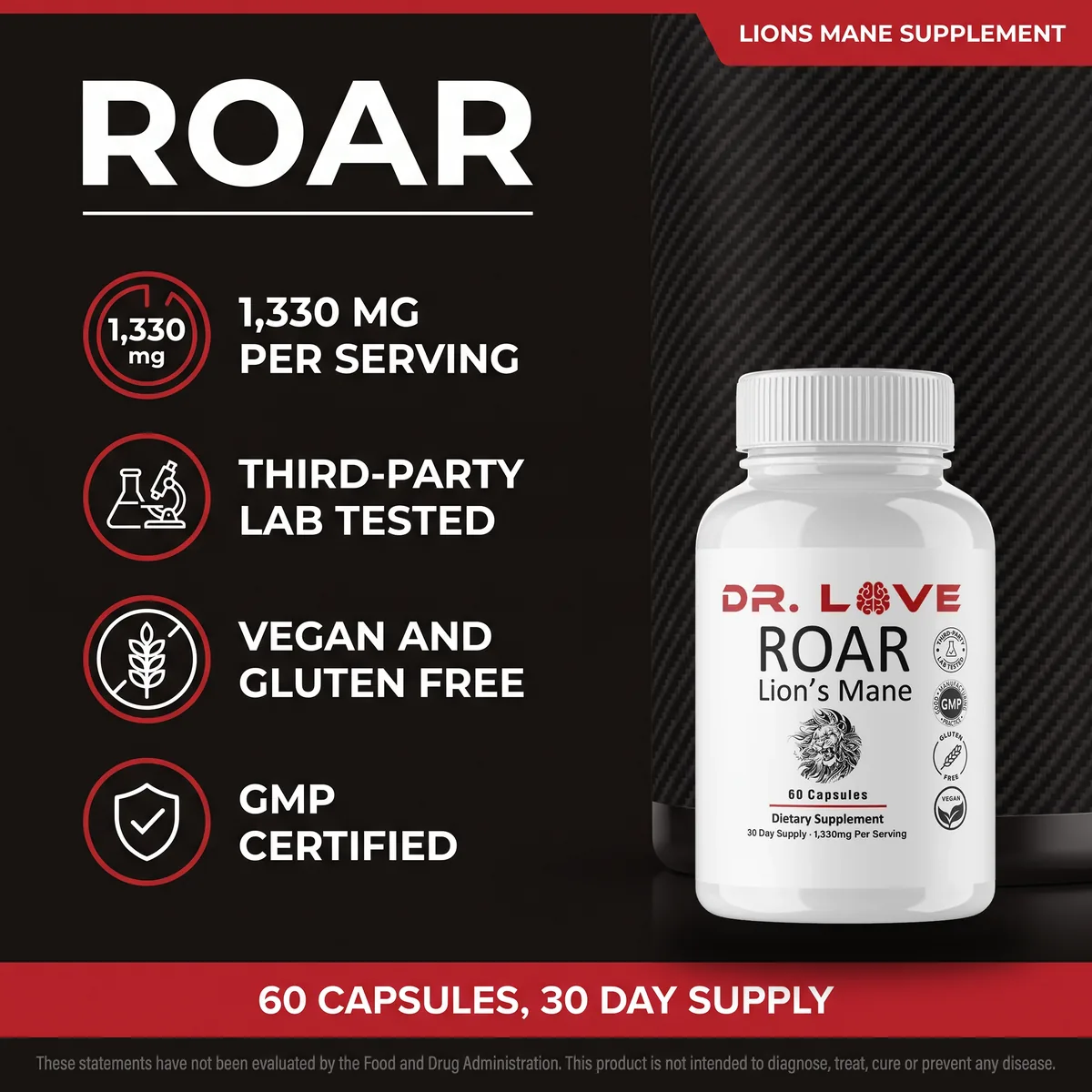
Prefer the convenience of a capsule to cooking mushrooms every day? Roar Lion’s Mane delivers 1,330 mg of single-ingredient Lion’s Mane a day — no fillers, no stimulants — with a 180-day money-back guarantee.
How to build a brain-friendly day of eating
Turning this into practice does not have to be complicated:
- Breakfast: Eggs or oats with berries and a few nuts — protein and slow carbs to start the day steady.
- Lunch: A big leafy-green salad with olive oil, plus a protein like fish, beans or chicken.
- Snack: A handful of nuts, some fruit, or plain yoghurt instead of something sugary.
- Dinner: Oily fish or a plant protein, plenty of colourful vegetables, and a whole grain.
- Daily habit: Your functional-mushroom supplement taken with a meal, plus plenty of water throughout the day.
Food is only one pillar, of course. It works best alongside good sleep, movement and distraction control — see our companion guide on how to improve focus and concentration naturally for the full picture. And if memory lapses are what brought you here, our guide to why you might be so forgetful lately covers the attention side of the same problem.
FAQ
What foods are best for memory and brain health?
The most commonly recommended brain foods include oily fish, leafy greens, berries, nuts and seeds, eggs, whole grains, extra-virgin olive oil and, for many people, functional mushrooms. The bigger win is an overall pattern rich in these foods rather than any single “superfood.”
Is there a single best food for the brain?
No. No single food makes or breaks brain health. What matters is the whole eating pattern over time — plenty of vegetables, oily fish, healthy fats and whole grains, with less ultra-processed food and added sugar.
Are mushrooms good for the brain?
Culinary and functional mushrooms are nutritious whole foods, and functional mushrooms such as Lion’s Mane are popular in the nootropic world. Lion’s Mane is a food-derived supplement people take as a daily habit; it is not a medicine and works best as part of a balanced diet.
Can diet alone fix memory problems?
Diet is one important lever among several — sleep, exercise, hydration and stress all matter too. Diet supports brain health but is not a cure for memory conditions. Persistent memory concerns should be discussed with a healthcare professional.
How much Lion’s Mane do people take?
Everyday supplement amounts commonly land in the region of 1,000 to 3,000 mg per day depending on the product. Roar provides 1,330 mg per two-capsule serving. Follow the label and consult your physician if you are pregnant, nursing, under 18 or taking medication.
References
- Gómez-Pinilla F. “Brain foods: the effects of nutrients on brain function.” Nat Rev Neurosci, 2008. PubMed 18568016
- Morris MC et al. “MIND diet slows cognitive decline with aging.” Alzheimers Dement, 2015. PubMed 26086182
- Friedman M. “Chemistry, Nutrition, and Health-Promoting Properties of Hericium erinaceus (Lion's Mane) Mushroom Fruiting Bodies and Mycelia and Their Bioactive Compounds.” J Agric Food Chem, 2015. PubMed 26244378
- Harvard T.H. Chan School of Public Health. “The Nutrition Source: Healthy Eating Plate.” nutritionsource.hsph.harvard.edu
- NIH Office of Dietary Supplements. “Dietary Supplements: What You Need to Know.” ods.od.nih.gov
The Roar Lion’s Mane Research Team is an independent group that writes plain-English guides on nootropics, functional mushrooms and everyday brain-health habits. We read the primary literature, avoid hype, and are careful to separate what is well established from what is still being studied. Our articles are reviewed for accuracy before publication and are intended as general information, not medical advice.
† These statements have not been evaluated by the Food and Drug Administration. This product is not intended to diagnose, treat, cure or prevent any disease. This article is for general information only and is not medical advice. Affiliate disclosure: Roar Lion’s Mane is an independent guide, not the manufacturer or seller. Some links on this page are affiliate links and we may earn a commission at no extra cost to you if you buy through them.